 Learn Jewellery Making
Jewellery making for beginners — the honest first-year roadmap
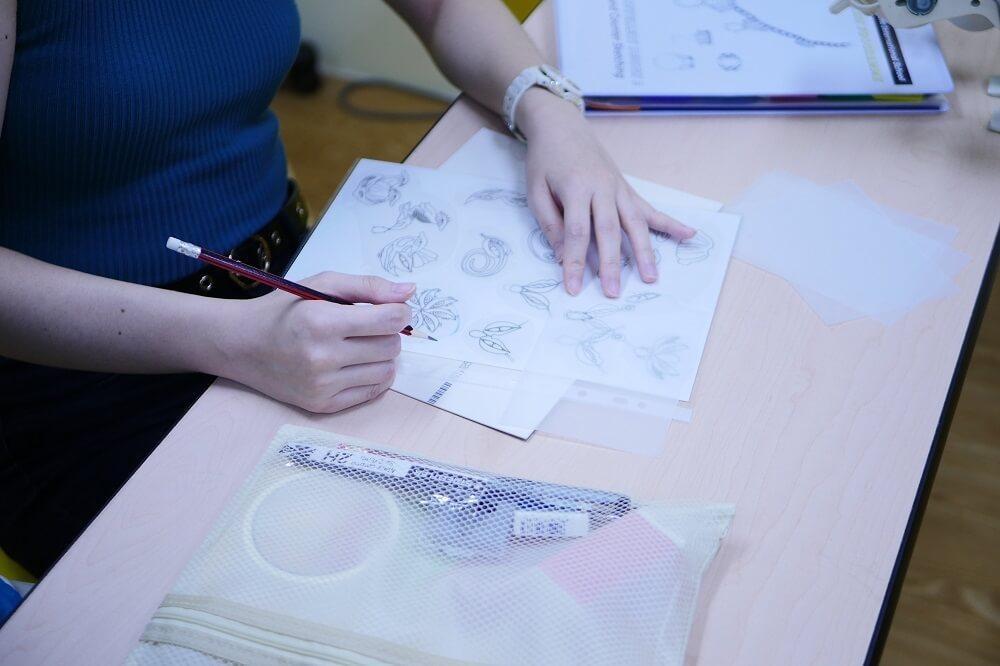
Pencil, tweezers and a hand-drawn pendant — jewellery starts on paper as often as it starts at the bench.
The internet makes jewellery making look either trivial (five-minute bracelet
videos) or impossible (master goldsmith benches). Reality is friendlier than
both. Here is the roadmap that works for most beginners.
Month 1 — find your door
Try before you invest. A single
experience class
tells you in one afternoon whether beads, metal or design is your thing. If
you love it, you will know; if you do not, you spent one afternoon and kept a
necklace.
Months 2–4 — the foundation course
Pick one family and do a proper foundation course, not scattered video
projects. The structured options in Singapore:
- Fashion jewellery (beads, fibre, wire):
Creative and Essential Fashion Jewellery Knowledge - Silver and metals:
Foundation Metalwork Skills and Experience - Design and drawing:
Aesthetic Self Discovery and Future Trends
Months 4–12 — make, make, make
Between courses, make your own projects with your own small kit. The
first-year mistakes are universal — uneven tension, rushed finishing,
over-complicated designs — and they only leave through repetition.
Year 2 — stack certificates into a diploma
Every JDMIS certificate course stacks toward a full
diploma
if you keep going. Real dates sit on the
admissions calendar.
Free resources for the waiting periods
- Free gem webinar replays —
knowledge between classes. - Name That Gem —
train your gem eye as a game. - The full course guide —
plan your ladder on one PDF.
Questions people actually ask
Can I learn jewellery making with no experience?
Yes — bead and wire jewellery especially needs no prior skills. Entry courses and one-day experience classes are designed for absolute beginners.
What should I learn first: beading or silversmithing?
Whichever you will actually practise. Beading starts faster and costs less; silversmithing takes longer to start but leads directly into fine jewellery fabrication. Many jewellers do both.
Do I need to buy tools before my first class?
No. A proper beginner class supplies tools and materials — that is part of what you are paying for. Buy tools only after your first course shows you which ones you actually reach for.
Is jewellery making expensive as a hobby?
The bead door is famously affordable. Silver costs more per piece but stays far cheaper than gold — mistakes are lessons, not losses.
What students say
“I will use the skills learnt to draw more designs for my company as we are now dealing a lot in fancy cut diamonds.”
— Darvina P. (Singapore) · published student feedback
“Attended the courses here and it's worth way more than what you have to pay for. The instructors are all super approachable and welcoming everytime they see you. The tools needed are provided and you get to bring home the crafts that you make during the class. Even the class schedules are pretty flexible. I enjoyed myself here a lot and will definitely sign up for more classes.”
— Nebulla L. (Singapore) · published student feedback
Free ways to explore
No sign-up, no payment — start with any of these.
Answer a few questions, get personal course recommendations.The complete course guideFREE
Every course, family and diploma in one PDF.Free gem webinar replaysFREE
Full recorded sessions on gems and the jewellery trade.Play Name That GemFREE
The school's free gem-identification game.
Try a one-day jewellery class
Short experience classes at JDMIS need no tools, no experience and no commitment — a single session gives you a real taste of the craft.
Visit jdmis.edu.sg